
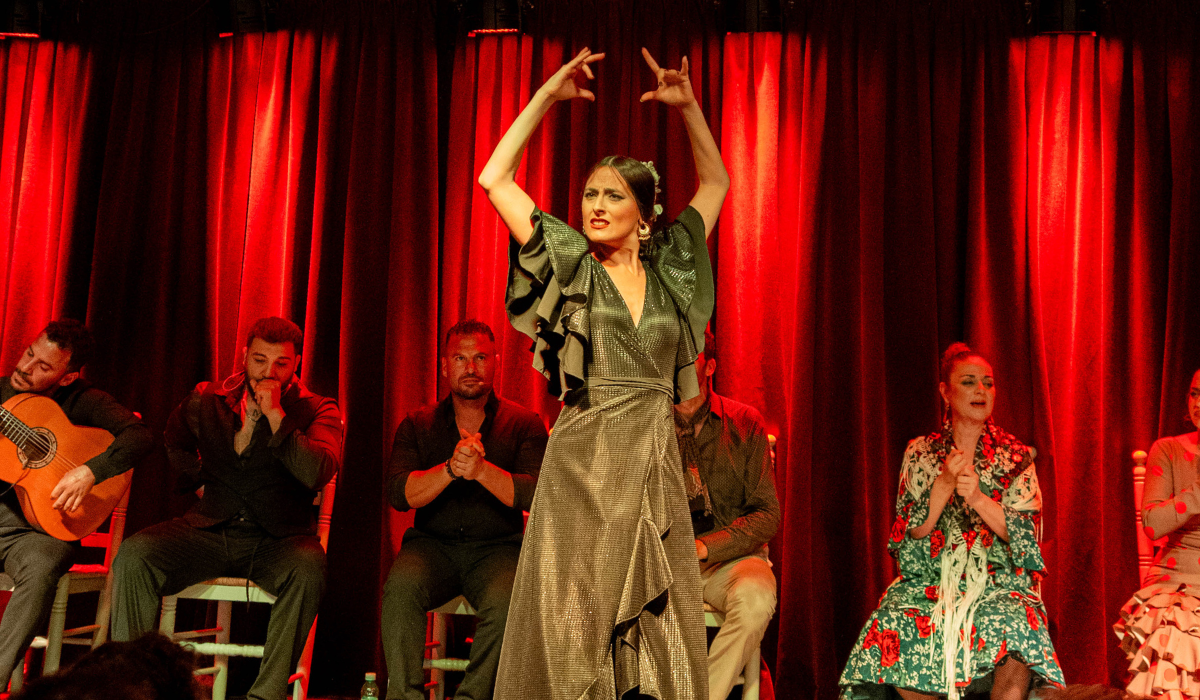
Have you ever wondered why certain dishes seem to taste better when they are paired with music? Flamenco is not only an art form for the ears. It can also awaken the palate in ways you might not expect.
A dining experience in a flamenco tablao goes far beyond simply having dinner. It becomes a sensory performance where every bite responds to the rhythm of the cajón, where wine seems to converse with the guitar, and where flavours feel more intense under the spell of duende.
When the Palate Dances: The Science Behind Flamenco Pairing
The human brain processes flavour differently when emotions are heightened. Surprising? Not really. For years, researchers have studied how music can influence the way we perceive taste.
Flamenco, with its sudden rhythmic shifts and emotional intensity, stimulates the senses in a particularly powerful way. That is why a simple tapa of Iberian ham can feel richer during a soleá than it would in an ordinary bar.
There is also a physical dimension to the experience. The percussion of the footwork can sync with the body’s natural rhythm. When the dancer marks the beat on the wooden stage, the audience often feels that pulse almost instinctively. The result is greater attention, stronger sensory awareness and a more vivid perception of flavour.
Then there is the atmosphere. Tablaos tend to have a warm, intimate environment, which helps aromas unfold. A perfectly chilled gazpacho served during a deep, dramatic seguiriya can become much more than a refreshing dish. It becomes part of the performance.
In flamenco dining, the setting matters. The music, the light, the closeness of the artists, the texture of the food and the rhythm of the evening all work together. The best flamenco food pairings are not just about matching ingredients. They are about matching emotions.
Wines That Speak Flamenco: From Bold Sherry to Passionate Reds
Let’s be honest: not every wine works in a flamenco setting. Some wines, no matter how elegant, simply fade into the background when the guitar begins and the cante takes over.
Sherry is the undisputed classic. Why? Because it comes from the same cultural landscape as flamenco. Its complexity, structure and intensity do not compete with the power of the singing. They complement it. A chilled fino with lively alegrías can create a kind of harmony that feels almost electric.
Fortified wines are especially effective because their acidity cleanses the palate between dishes. That matters when you are enjoying a varied dinner menu. Amontillado, with its nutty notes, pairs beautifully with aged cheese and Iberian ham. Its slightly toasted character echoes the raw texture of the singer’s voice.
Red wines can also work, but they need to be chosen carefully. The ideal red for a flamenco dinner should have character without overwhelming tannins. A Ribera del Duero crianza can be a strong option. A young Priorat may also work well. Heavier, overly formal reds can feel out of place in such an expressive and spontaneous environment.
Andalusian rosé wines deserve a special mention. Fresh, fruity and bright, with just enough acidity to wake up the palate, they are perfect for the early part of the evening, when the audience is settling in and the artists are beginning to build momentum.
For the end of the night, a sweet Moscatel can be unforgettable. As the final guitar notes fade, its natural sweetness offers a warm, memorable closing note. It contrasts beautifully with the emotional intensity of the show and leaves the palate with a sense of calm.
Tapas That Keep the Beat: Small Bites, Big Sensations
In the context of flamenco, tapas are not just food. They are small gastronomic accents that help structure the sensory experience. After all, trying to eat a heavy, complicated dish while a dancer performs a powerful farruca is hardly ideal.
The key is to choose bites that can be enjoyed without missing a moment of the show. Marinated olives, for example, are perfect. Their intense flavour lingers on the palate, and they require very little attention. Their saltiness also encourages you to sip your drink and relax into the rhythm of the evening.
Hand-cut Iberian ham reaches another level in a tablao. The warmth of the room softens the fat slightly, releasing aromas that mingle with the scent of wood, wine and stage lights. It sounds romantic because it is.
Aged cheeses also work beautifully. Manchego, Cabrales, Torta del Casar and other intense Spanish cheeses hold their own against the volume and force of flamenco percussion. Their flavour does not disappear. If anything, it becomes more expressive.
Texture matters too. Avoid anything excessively crunchy or noisy. A good cured meat board is welcome, but hard crusts or shell-on nuts can interrupt the atmosphere. Respect for the art always comes first.
Smoked fish can create a surprising contrast. Salmon, mackerel, anchovies and other salty, marine flavours bring a coastal freshness that plays well against the earthy intensity of flamenco. It feels as though the Mediterranean has quietly entered the tablao.
Do not underestimate a well-made pâté either. Duck liver pâté, game pâté or other rich, creamy options can accompany the more melodic sections of the performance beautifully. When the guitar takes the lead and the singing softens, a smooth, lingering flavour can be the perfect companion.
The Ritual of a Flamenco Dinner: Timing and Temperature Matter
When should you eat during a flamenco show? The question is more important than it seems. Timing is everything.
The first dishes should arrive before the most intense part of the performance begins. During the introduction, the first musical pieces or the early build-up of the evening, the palate has time to settle in. You want to be ready for the emotional peak, not caught halfway through a mouthful when the singer delivers a heart-stopping line.
Warm salads are ideal at the beginning. Think baby eels with ham, cod with roasted peppers or light Mediterranean starters that wake up the appetite without filling you too much. The night is long, and there are more emotions to come.
Main courses work best during the more narrative sections of the show, when the music slows slightly and the performance gives guests space to enjoy something more substantial. Rice with vegetables, traditional croquettes, grilled fish with a light garnish or tender meat dishes can all fit beautifully.
But never choose a dish that demands too much cutting or effort during a powerful flamenco moment. If the artists are giving everything on stage, the last thing you want is to be struggling noisily with a knife and fork.
Temperature is also important. Dishes that are too hot release steam and aromas that may disturb nearby guests. They can also distract you if you are trying not to burn your mouth while keeping your eyes on the performance.
Desserts should arrive with the softer music toward the end. Flan, torrijas, tocino de cielo and other traditional sweets connect naturally with the roots of flamenco. Very cold desserts, such as ice cream or sorbet, are less ideal because they can numb the palate just as the evening reaches its emotional climax.
Unexpected Pairings: Bold Combinations That Work
Now comes the exciting part: the pairings that sound unusual but make perfect sense once you try them.
Dark chocolate with deep cante jondo may sound daring, but the bitterness of cocoa intensifies the melancholy of styles such as seguiriyas. It is a powerful sensory experience, not for everyone, but unforgettable for those who connect with it.
A gin and tonic with fresh rosemary during alegrías can also work surprisingly well. The gin brings freshness, the rosemary adds a Mediterranean note, and the bubbles echo the lively rhythm of the footwork. Modern? Yes. Effective? Absolutely.
Gazpacho with a subtle touch of Andalusian whisky is another unexpected combination. The warmth of the spirit meets the cool acidity of tomato, creating a temperature contrast that mirrors the rhythmic changes of flamenco.
Coffee with brandy and cinnamon during tarantas offers a different kind of depth. Tarantas carry a profound, almost mineral melancholy, and the roasted notes of coffee with the sweetness of cinnamon create a pairing full of character.
Caramelised nuts with sea salt during bulerías are another winning match. Sweet, salty and crunchy, they create a textural burst that suits the complex rhythm of this festive flamenco style. It is a small bite with a lot of personality.
And for something truly unexpected: bluefin tuna sushi with thick salmorejo. East and West meet while the guitar plays. It works because the umami of the fish is enhanced by the acidity of the tomato, while both flavours remain clean enough to respect the music.
Do these combinations sound unusual? Perhaps. But flamenco itself was once a daring fusion of voices, cultures and emotions. Art evolves. Gastronomic pairing should evolve too.
The Final Touch: How to End a Perfect Flamenco Night
The evening is coming to an end, the artists have poured their energy onto the stage. Your palate has travelled through Andalusia without leaving the table. So how should a night like this close?
The digestif can make the difference between a good evening and an unforgettable one. Not just anything will do. You need something that honours what you have just experienced.
An aged Brandy de Jerez is always a strong choice. Its warmth settles gently after the final chords and lingers in the memory. If you want something different, a handmade pacharán can also work well, with its sloe berry sweetness offering a soft contrast to the intensity of the night.
Andalusian herbal liqueurs are also gaining attention
Rosemary, thyme, mint and other southern herbs bring flavours that connect directly with the landscapes of the region. A small glass, enjoyed slowly, can be the perfect way to digest both the meal and the art.
If you do not drink alcohol, try a small coffee with almond milk and a touch of orange blossom honey. Almonds are deeply connected to Andalusian flavour, orange blossom evokes southern courtyards, and honey brings the natural sweetness needed after such an emotionally charged experience.
But the real secret to ending the night well is silence. A few quiet minutes. No rushing. No immediate conversation. Just letting the flavours, the music and the memories settle.
Some tablaos offer one final gesture: a small glass of Moscatel with a delicate biscuit or pastry. A simple detail that rounds off the evening like the last note of a guitar fading into the air.
And when you step outside, you may notice that the flavours are still dancing on your palate. That the perfect pairing of flamenco and gastronomy has created a memory far more lasting than the meal itself. Because this was never just dinner. It was art experienced with every sense awake.
Experience your own flamenco food pairing at Tablao El Mentidero, where every dish is designed to enhance the magic of the performance. Book your flamenco dinner show and discover how true art is meant to be enjoyed with all five senses.