
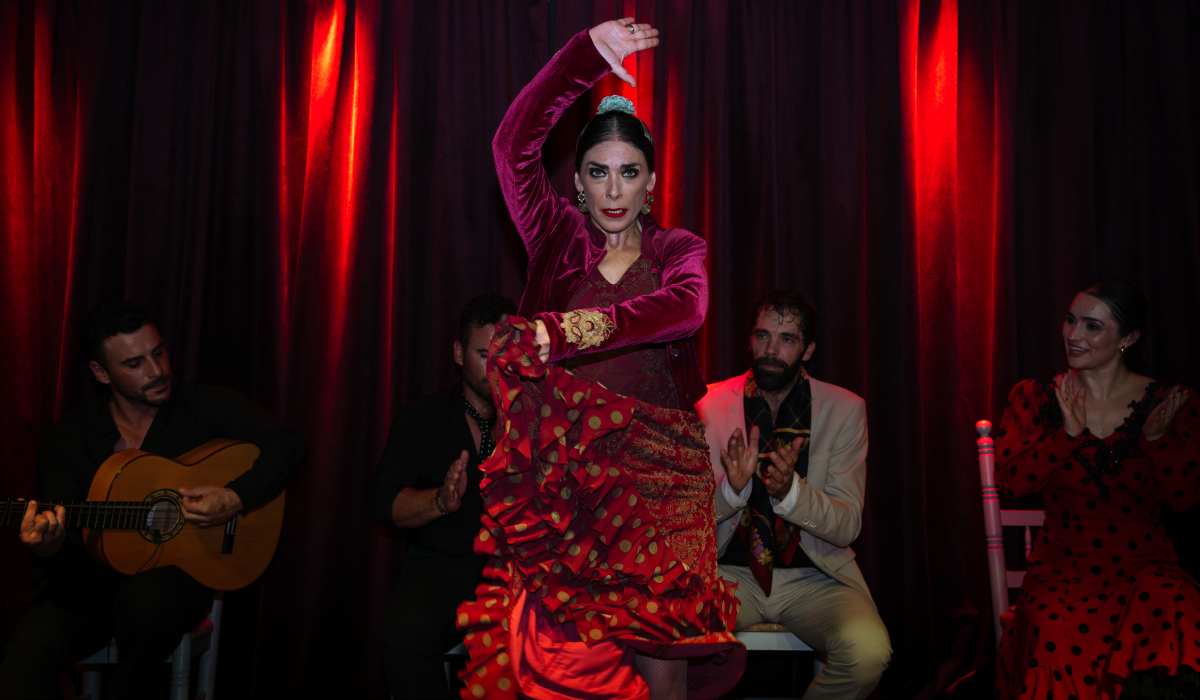
When most people think of flamenco, their minds jump straight to Seville, Jerez, or Granada. But Alicante has something to say. And it says it loud. Here, flamenco isn’t a backdrop or a tourist souvenir. It’s raw, heartfelt art—sung from the chest, danced with feet grounded firmly in the earth.
Alicante is Mediterranean, yes. It’s sun, sea, and rice. But it’s also tablaos, rhythm, and duende. Anyone who’s stepped into a flamenco venue in Alicante with an open heart and heard a cante por soleá knows exactly what we mean. This goes way beyond tourist clichés, is real, is roots and is pure art.
And if you haven’t experienced it yet—there’s still time. We’ll walk you through everything. No fluff. No filters.
Alicante is Flamenco Too (Even If Not Everyone Knows It)
This isn’t just another guide. It’s an invitation to experience flamenco in Alicante with your eyes wide open—and your soul even more. You’re about to discover:
- Why flamenco has also found a home on the Costa Blanca.
- Where to find dancers and singers who give you goosebumps.
- What makes a true tablao so special.
- How to get ready to experience it the way it deserves.
And yes, we’ll also tackle all those common questions people are usually too shy to ask.
Everything told from the inside. Like the way artists talk backstage, after a perfect night on stage.
Flamenco with Alicante Accent: Sun, Skin, and Rhythm
It’s Not Just a Southern Thing
Flamenco was born in Andalusia—no one’s arguing that. But it grew far beyond, and one of the places it grew roots was Alicante. For years, this city has been a stop—and a home—for flamenco artists. Some stayed. Some passed through and left their mark.
Here, flamenco soaks up the Mediterranean. It carries something special—a rhythm shaped by the light, the weather, the way of life. It respects the tradition but looks today straight in the eye. It’s direct, warm, and unapologetically honest.
El Mentidero: Where the Magic Happens
You can’t talk about flamenco in Alicante without mentioning Tablao Flamenco El Mentidero. There’s no set dressing here. No pretenses. Just real artistry. Every night, in this intimate and carefully crafted space, flamenco sounds the way it should: soulful and alive.
The audience sits so close, you can hear the artists breathe. Nothing’s overacted. They just feel, sing, dance, and give it their all. And you feel it.
You can book your spot here and experience it for yourself. Because flamenco isn’t something you’re told about—it’s something you live. Though we’ll still try to describe it.
Beyond the Stage: Artists You Should Know
Alicante is home to rising stars. Dancers trained not only in studios, but also in festivals, late-night performances, and living-room celebrations. Lucía Cano, El Choro, Ana Lloris… Some names ring out more than others, but all of them carry that spark—the kind you’re born with, not taught.
And then there are the singers—cantaores like Manuel de la Moya or Cristina Soler. When they open their mouths, they tell stories without words. Because flamenco singing isn’t understood in your head. It’s felt in your chest.
How to Truly Enjoy a Flamenco Show in Alicante (And Not Get Lost on the Way)
First: Choose the Right Place
Not everything labeled “flamenco” really is. Some restaurants play guitar in the background and call it a show. But that’s not a tablao. A real tablao has a proper stage, sound, committed artists, and deep respect for the art.
In places like El Mentidero, nothing is improvised. Rehearsals happen. Sound is dialed in. Flamenco lives in the air from the moment the lights go up to the final palmas.
Arrive Early and Unhurried
Flamenco isn’t just about the showtime. It’s what you feel before, what lingers after. Come early if you can. Have a drink. Slow your pace. Put your phone away. Watch with all five senses turned on.
And if there’s dinner involved, try to eat before the show. Listening to a seguiriya while chewing isn’t quite the same as feeling it with your full attention.
Let Yourself Go (Even If You Don’t Understand It All)
You don’t need to know the difference between a soleá and a bulería to be moved. Sure, if you can tell the styles apart, you’ll enjoy it even more. But flamenco gets under your skin—it doesn’t need a glossary. And when a dancer starts zapateando just inches from you, no encyclopedia can explain what that does to you.
When’s the Best Time to Go?
Whenever you want. There’s no “flamenco season.” Winter shows are more intimate. Summer draws more visitors. But real art doesn’t follow a calendar.
A Little Extra: History, Style, and What You Don’t Usually See
Why Are Alicante’s Tablaos So Alive?
Because the demand is real. The artists are passionate. And the audiences are tuned in. Alicante is a vibrant, open, diverse city. And flamenco—just like the Mediterranean—has always thrived on that mix.
There’s also a deep emotional connection to Andalusia that goes beyond geography. Many Andalusian artists have made their homes here. Many locals have come to love flamenco as their own.
Which Flamenco Styles Will You Hear Most?
- Bulerías: When there’s a party, a finale, or fire in the air.
- Soleás: When pain turns into art.
- Alegrías: When the soul smiles but stays deep.
- Tangos: For playfulness, flow, and improvisation.
Each palo has its character. A good show takes you through them—just like life: sometimes you laugh, sometimes you cry, sometimes you clap without even thinking.
Common Questions (And Why They’re Totally Fine to Ask)
Do I need to know flamenco to enjoy it?
Absolutely not. Flamenco is something you feel. If it grabs you, you’ll learn more later. But you don’t need a degree to be moved.
Can I bring kids?
Depends on the kid. If they can sit quietly and appreciate the atmosphere, go for it. Some venues even encourage it. But always check in advance.
Can I eat during the show?
Some places allow it. But if you can, eat before or after. Flamenco deserves your full attention. The artists will appreciate that.
Tablao or theatre?
Theatres can be stunning. But a tablao is something else. It’s sweat, breath, and soul just inches away. It’s being inside the experience—not just watching it.
If You’re Going to Do It, Do It Right
Alicante is flamenco. Even if it doesn’t shout it, it sings it. Even if it’s not printed on tourist brochures, it shows it—night after night in its tablaos.
If you want to live flamenco in Alicante, go all in. Choose wisely. Watch. Listen. Feel.
And if you want a guaranteed unforgettable experience, book your spot at El Mentidero. Because watching flamenco is one thing. Living it the way they do here? That’s another level entirely.
See you under the lights. Where it all happens, it all burns. Where—though you won’t know exactly why—you’ll want to come back.