
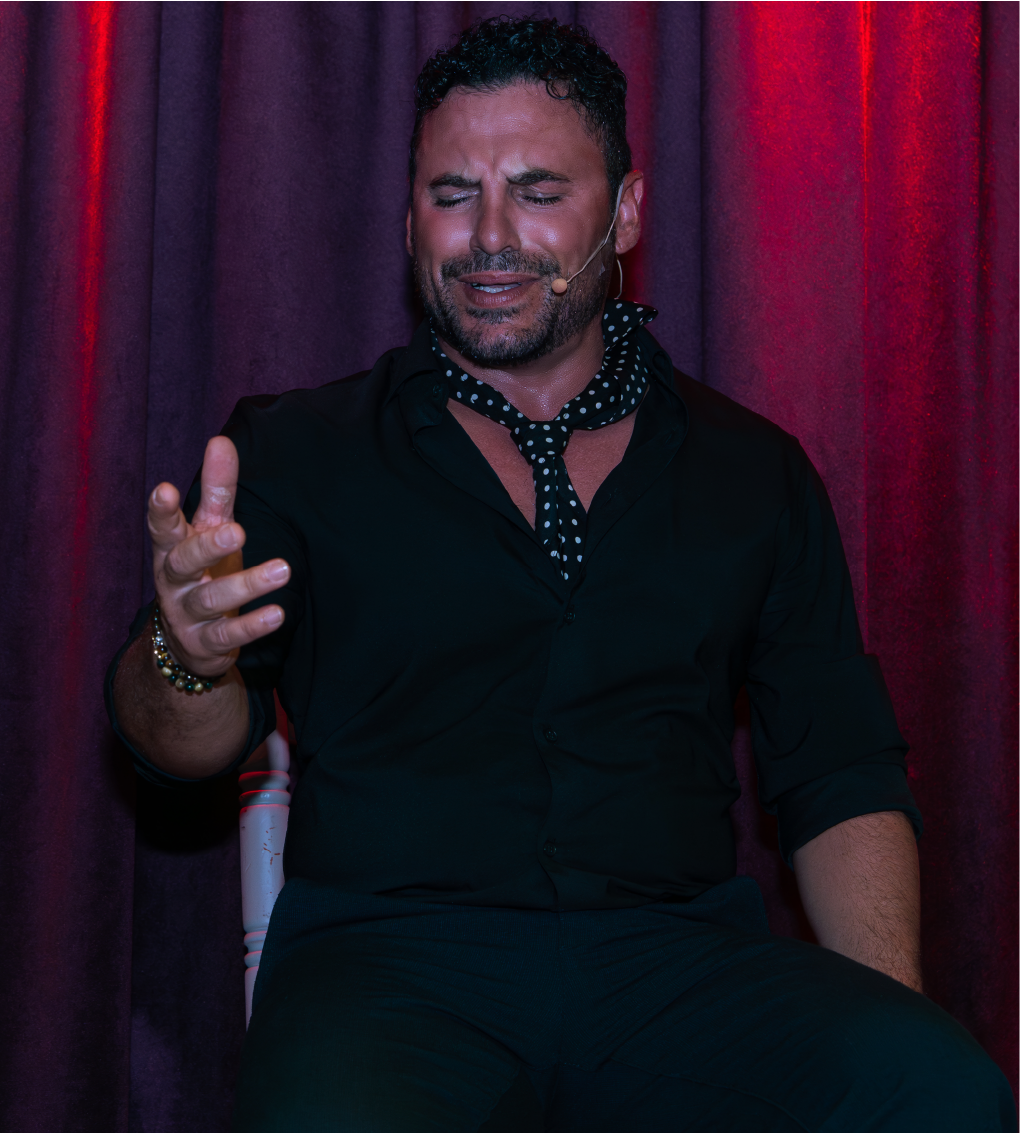
You can’t truly understand flamenco without feeling it. It doesn’t come from a textbook, and it’s not something you simply learn in a class. Flamenco is transmitted, felt, and deeply lived. Though its soul is Andalusian, it has long taken root in other lands—like Alicante—where the arte jondo has found a new voice without losing its magic. In this land of light and sea, flamenco breathes differently, but with the same fire.
In this article, we’ll explore its origins, yes—but also the places, the people, and the moments that keep it alive today. Because when flamenco is sung with truth, it stays with you.
Flamenco isn’t explained—it’s experienced
We’ll take a journey into the past to understand where flamenco comes from and why it stirs such deep emotion. But we’ll also show you how it lives and breathes today on the Costa Blanca. From its ancient roots to evenings in a tablao where rhythm blends with the aroma of traditional cuisine.
And if, by the end, you’re ready to feel it live, we’ll show you where you can—right here in Alicante: with soul, with heart, and with flavor at Tablao Flamenco El Mentidero.
The journey of flamenco: from earth to stage
A living art born at a crossroads
Flamenco doesn’t have a single origin—it’s a child of many cultures. The Roma people brought influences from India; the Moors added their deep melismas; the Sephardic Jews contributed musical sensitivity; Andalusian peasants brought folk singing… each added a layer.
In that mix—on patios, in the streets, and in humble homes—a new language emerged. It started with cante (singing), raw and unaccompanied. Then came the toque (guitar), subtle and supportive. And finally, the baile (dance), where the body speaks what the voice cannot.
From whispered songs to stage lights
For a long time, flamenco was intimate—shared among friends and family. But in the 19th century, it stepped into the spotlight with cafés cantantes and later tablaos, transforming into a public spectacle while preserving its soul.
Since then, icons like Camarón, Paco de Lucía, Carmen Amaya, and Enrique Morente have left their mark—alongside countless lesser-known artists who’ve kept the flame burning night after night.
Alicante and the costa blanca: a land where flamenco feels at home
Yes—there’s duende here too
Though flamenco wasn’t born in Alicante, it’s long felt at home here. This open, welcoming city has embraced it as part of its cultural identity—not as a trend, but as something real and enduring. You’ll find it in peñas, schools, and stages that celebrate flamenco with deep respect.
El Mentidero: a tablao with soul
One shining example is Tablao Flamenco El Mentidero, where something unique is created every night. You don’t just watch flamenco here—you feel it. The singing pierces, the footwork hits your chest, the guitar speaks straight to your ear. And all of it happens around a shared table, over a good meal. Because here, flamenco is something you taste too.
The perfect plan: dinner & flamenco in Alicante
Some experiences stay with you—and this is one of them. A flamenco show with dinner in Alicante isn’t just a tourist activity; it’s a way to celebrate life, to connect with something deep, and to let yourself be carried away.
In places like El Mentidero, the atmosphere is everything: warm lighting, artists just steps away, a respectful crowd… and a dinner that enhances the show without taking the spotlight. You don’t need to “understand” flamenco to be moved. You just need to be present.
How Alicante lives flamenco today
A year-round calendar with andalusian flair
Flamenco in Alicante is more alive than ever. Throughout the year, you’ll find moments where this soulful art takes center stage:
- Festival Flamenco Mediterráneo, bringing together legends and rising stars
- Local flamenco clubs (peñas), still the heart of the scene
- Community festivals, where bulerías pop up among friends
Schools that nurture the future
Thanks to local dance academies and music programs, flamenco keeps evolving. Girls learning bata de cola, young people picking up guitar or voice—Alicante doesn’t just enjoy flamenco, it creates it.
Audiences that let themselves be moved
The beauty of flamenco is that you don’t need to be an expert to feel it. In every show, there’s someone who’s loved it all their life and someone seeing it for the first time. But everyone leaves with something stirred inside. That’s the magic.
Key concepts to understand flamenco (even if you’re new)
The three pillars
- Cante (Singing) – The soul. Raw, honest, and stripped of excess. Each style (soleá, seguiriyas, alegrías) carries its own emotion.
- Toque (Guitar) – Not just accompaniment. The flamenco guitar has its own voice, full of nuance.
- Baile (Dance) – Not performed to impress, but to express. Every movement has meaning.
The Palos: many styles, one Root
Flamenco includes dozens of styles, or palos. Some are born of sorrow, others of joy—but all are deeply expressive:
- Soleá – Serious and deep, like a long sigh
- Bulería – Fast, playful, perfect for closing a party
- Fandango – Freer in form, with regional variations
Questions people often ask about flamenco on the costa blanca
“Is flamenco only Andalusian?”
It began there, yes—but today, its heart beats in many places. Alicante has embraced it with genuine respect and passion.
“Is there real flamenco in Alicante?”
Absolutely. You just need to know where to look. El Mentidero is one of those places where flamenco is lived up close—no gimmicks, just heart.
“Do I need to understand it to enjoy it?”
Not at all. Flamenco hits you through the skin. If it touches you, that’s enough. The rest comes with time.
Come feel flamenco in alicante
Flamenco in the Costa Blanca isn’t a copy—it’s a living, honest, emotional expression. Here in Alicante, it has found a new home without losing its roots. And if you want to experience it as it deserves, there are places where every night becomes a celebration of the soul.Tablao Flamenco El Mentidero is one of them. Because here, flamenco isn’t just seen—it’s breathed, heard, and celebrated. And once you live it… you never forget it.