
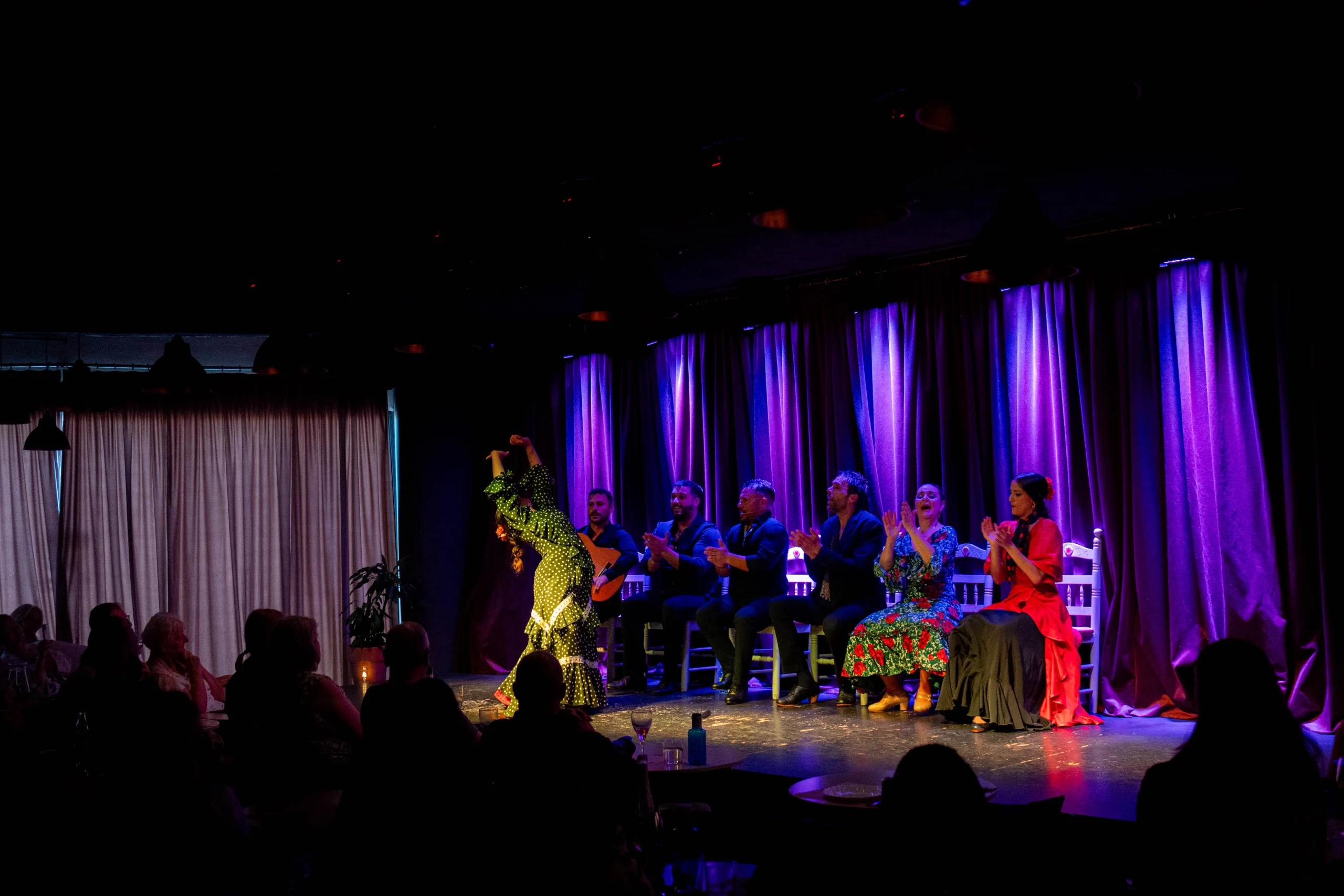
Have you ever had this happen to you?
You arrive in Alicante dreaming of an unforgettable flamenco night. You search online, click on the first venue that pops up, book a table… and end up trapped in a tourist disaster. A table next to the kitchen, a painfully amateur performance, and a bill that hurts more than heartbreak itself.
After years writing about tourism and travel experiences across Spain, I’ve seen it all. People paying €80 per person for what turned out to be little more than a noisy bar with background guitar music pretending to be authentic flamenco.
The problem in Alicante isn’t the lack of options.
It’s that most visitors keep making the exact same mistakes over and over again.
Timing Is Everything (Almost)
Booking a flamenco tablao in Alicante isn’t like buying movie tickets. Timing can completely change your experience.
Alicante’s high season kicks off in April and doesn’t slow down until October. During summer — especially July and August — the best flamenco venues are often fully booked weeks in advance. And it’s not just weekends anymore. Even Tuesday night performances can sell out fast.
What surprises me most?
The number of travelers trying to reserve a table on the same day.
Huge mistake.
The best flamenco venues — the ones genuinely worth your money — rarely have last-minute availability during peak season. So what happens? You end up booking whatever still has space left… and there’s usually a reason nobody else booked it.
In my experience, the sweet spot to book a flamenco show in Alicante is around 2 to 4 weeks before your trip. Any later and you risk missing out on the top venues. Any earlier and schedules or artist lineups may still change.
Locals know a trick most tourists don’t: book midweek performances, especially Wednesdays and Thursdays. You’ll usually get:
- Smaller crowds
- Better service
- A more intimate atmosphere
- Sometimes even lower prices
And very often, the exact same artists performing on the weekend.
Beware of Local Festivals and Holidays
If your trip overlaps with:
- San Juan celebrations
- Hogueras de Alicante
- Easter Week
- Summer festivals
…expect demand — and prices — to skyrocket.
I’ve personally seen tourists pay triple the normal rate just because they waited too long during festival periods.
And yes, showtimes matter too.
Earlier performances around 8:30 PM or 9:00 PM usually offer a more relaxed atmosphere and better seating availability. Later shows (10:30 PM onward) tend to attract tourists chasing a supposedly “more authentic” experience.
Spoiler alert: the quality of the flamenco is usually identical.
Fake Booking Websites: The Tourist Trap Nobody Warns You About
The internet is full of fake intermediaries pretending to be official flamenco venues.
And honestly? It’s a jungle out there.
Last year, a German couple contacted me after paying €120 per person through a flashy website advertising “the ultimate flamenco experience in Alicante.” When they called the venue to confirm their reservation, they discovered something horrifying:
The reservation didn’t exist.
The website had vanished.
Golden Rule: Always Book Directly
Whenever possible, reserve through the official venue website, such as: Tablao Flamenco El Mentidero
Booking directly helps you avoid:
- Hidden commissions
- Fake reservations
- Inflated prices
- Poor customer support
How to Spot a Fake Flamenco Booking Site
Here are a few simple checks:
1. Look at the Domain Name
Official venues usually include their business name in the URL.
2. Verify Contact Information
A legitimate flamenco venue should provide:
- A real address
- A local phone number
- Active social media profiles
3. Read Recent Reviews
Not just star ratings. Read detailed reviews mentioning:
- The atmosphere
- The artists
- The food
- The seating experience
Platforms like TripAdvisor and Viator can be useful for research, but remember: they usually add a 15–30% markup.
Use them to compare options — then book directly.
Another Common Scam
Some websites steal photos and descriptions from prestigious flamenco venues while actually selling tickets to lower-quality locations.
If an offer sounds too good to be true, it probably is.
And pay attention to payment methods too. Legitimate businesses accept credit cards and provide legal invoices. Be cautious with websites asking only for:
- Bank transfers
- Crypto payments
- Untraceable payment methods
Always read the cancellation policy before paying.
Seating Matters More Than You Think
Here’s a truth nobody tells tourists:
Where you sit can completely define your flamenco experience.
Most online bookings assign seats automatically without asking for preferences.
And trust me — not all tables are created equal.
Typical Seating Areas in a Flamenco Tablao
Front Row
You’ll be incredibly close to the performers… which sounds amazing until you realize flamenco dancers sweat. A lot.
Sometimes onto you.
Middle Tables (Best Option)
Second and third-row tables usually offer the perfect balance:
- Great visibility
- Better acoustics
- Comfortable distance
- Full immersion without discomfort
Side or Elevated Areas
These provide decent overall views but lose some of the emotional intensity and eye contact with the performers.
The “Bad Tables” Exist
Just like restaurants have terrible tables near bathrooms or kitchens, flamenco venues often reserve weaker seating areas for:
- Last-minute bookings
- Large tour groups
- Third-party reservations
That’s why booking directly and early matters so much.
When making your reservation, specify your preferences clearly:
- “Central seating preferred”
- “Second-row table if possible”
- “Away from busy walkways”
Professional venues genuinely try to accommodate requests.
At larger venues like El Mentidero, the difference between a good table and a bad one can be enormous.
What About Large Groups?
If you’re booking for more than six people, expect either:
- Side seating
- Split tables
- Less intimate positioning
Not necessarily bad — just something to know in advance.
Some venues also allow guests to arrive early and choose seating on a first-come, first-served basis. If available, take advantage of it.
Arriving 30 minutes before the show can make a massive difference.
Food Can Make or Break the Night
Most tourists focus entirely on the flamenco show and completely ignore the dinner experience.
That’s a huge mistake.
Because honestly?
Many tablaos serve mediocre food.
Some venues prioritize the performance and treat the restaurant side as an afterthought. The result:
- Reheated dishes
- Low-quality ingredients
- Tourist-priced menus
I’ve had “paellas” that tasted like yellow rice with food coloring and “Iberian ham” that clearly wasn’t Iberian at all.
Before Booking, Research the Gastronomy Too
Don’t just read reviews about the flamenco show.
Look specifically for comments about:
- Food quality
- Ingredient freshness
- Wine selection
- Service standards
Good venues proudly display detailed menus online, often including:
- Ingredient origins
- Local products
- Dietary adaptations
If all you see is “Traditional Spanish Menu” without specifics… be suspicious.
A Simple Trick That Never Fails
Ask to see the full menu before booking.
Venues with excellent kitchens are proud to show it.
Those hiding behind “fixed menus only” often have something to hide.
Drinks Matter Too
Quality flamenco venues usually offer:
- Thoughtful wine lists
- Local Alicante wines
- Pairing suggestions
Lower-end places often push anonymous “house wine” without explaining anything.
And be careful with drink prices outside the menu package. I’ve seen tourists charged €8 for a simple soft drink.
Vegetarian and Vegan Options
Thankfully, Alicante’s flamenco scene has improved dramatically in recent years.
Places like El Mentidero now offer plant-based Mediterranean dishes without compromising quality.
Still, always mention dietary requirements when booking. Kitchens need preparation time to do things properly.
Professional Artists vs Tourist Entertainment
This is where things get serious.
Not every “flamenco performer” in Alicante is a true professional.
Far from it.
The gap between authentic flamenco and tourist entertainment is enormous — like comparing a local pub cover band with a world-class concert guitarist.
Real flamenco takes years of training.
- Guitar
- Singing
- Dance
- Rhythm
- Improvisation
- Compás
Everything requires technical mastery and emotional depth.
But mass tourism has created huge demand, and some venues try to fill seats using:
- Weekend hobbyists
- Students
- Inexperienced performers
How to Recognize a High-Quality Flamenco Show?
Research the Artists
Professional performers usually have:
- Conservatory training
- Festival appearances
- Collaborations with respected artists
- Documented careers
Quality tablaos proudly share this information.
Check Artist Stability
Serious venues maintain consistent lineups of professional artists.
Lower-quality venues constantly rotate performers because they can’t retain talent.
Look at Show Structure
A professional flamenco performance should last at least 90 minutes and include multiple flamenco styles, such as:
- Soleá
- Bulerías
- Tangos
- Alegrías
Amateur shows are often repetitive, shorter, and technically limited.
Venues like Tablao Flamenco El Mentidero typically publish detailed artist schedules and performance information. Use that transparency to judge quality.
Be Careful With Marketing Hype
Phrases like:
- “The best flamenco show in Spain”
- “The world’s most authentic flamenco experience”
…usually mean very little.
Real professionals let the performance speak for itself.
One Final Detail That Reveals Quality
Ask whether the artists explain flamenco traditions during the show.
Experienced performers often help audiences understand:
- Different flamenco styles
- Rhythmic structures
- Cultural history
- The emotional meaning behind each performance
That educational element usually signals authenticity.
Step-by-Step: How to Book a Flamenco Show in Alicante Properly
Alright — here’s the practical roadmap.
You’ve chosen the venue. You understand timing, seating, food, and artist quality.
Now it’s time to book smart.
Step 1: Call the Venue Directly
I know it sounds old-school, but speaking directly with the venue helps you:
- Confirm real availability
- Ask about unpublished offers
- Request seating preferences
- Evaluate customer service immediately
The professionalism of the conversation alone tells you a lot.
Step 2: Use the Official Website
If booking online, always use the venue’s official site.
Fill out every available detail:
- Number of guests
- Dietary restrictions
- Special occasions
- Seating preferences
The more information you provide, the better your experience usually becomes.
Step 3: Save Every Confirmation
Keep:
- Confirmation emails
- Payment receipts
- Booking references
Download or screenshot everything.
Technical errors happen more often than you’d think.
Step 4: Reconfirm 24–48 Hours Before
Especially during high season.
Schedules, artist lineups, and opening times occasionally change. A quick confirmation call avoids unpleasant surprises.
Step 5: Ask About Arrival Time
Some venues require guests to arrive:
- 15 minutes early
- 30 minutes before the show
- Earlier for dinner service
Arriving late isn’t just disrespectful to performers — it can also cost you your table.
Step 6: Read the Cancellation Policy Carefully
Policies vary widely between venues.
Some allow free cancellation up to 24 hours before. Others apply penalties or refuse modifications entirely.
Know the rules before paying.
Step 7: Coordinate Group Reservations Properly
For larger groups, appoint one person to handle communication with the venue.
Multiple people contacting the tablao separately often creates confusion and booking errors.
Step 8: Check the Dress Code
Most flamenco venues don’t require formal attire.
But beachwear and flip-flops?
Usually not appreciated.
Smart casual is almost always the safest choice.
Final Thoughts
The difference between an unforgettable flamenco night and a disappointing tourist trap comes down to details.
Booking a flamenco show in Alicante properly takes:
- Research
- Timing
- Common sense
- A little planning
But when everything aligns — the venue, the artists, the atmosphere, the food — the experience becomes something truly unforgettable.
Don’t leave it to chance.
Because in flamenco, just like in life, improvisation belongs on stage… not in the organization.