
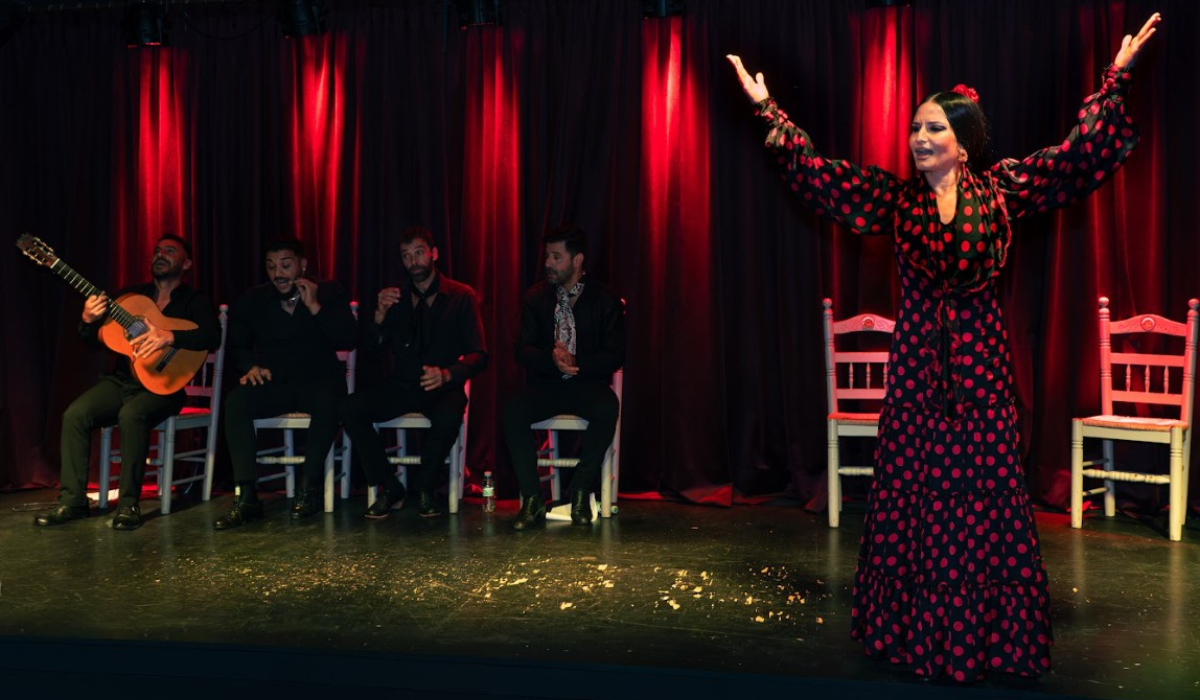
Authentic Flamenco Tablao: The Tourist Trap You Want to Avoid
Have you ever paid for something advertised as “pure art,” only to realize it was a staged, pre-packaged performance?
It happens more often than you’d think in the world of flamenco—and it’s rarely cheap.
After years of visiting tablaos across Spain, I’ve seen it all. From performances that give you goosebumps to tourist traps disguised as cultural temples, charging premium prices for a hollow experience. The tricky part? The difference isn’t always obvious at first glance.
But don’t worry—here’s exactly what to look for.
When the Venue Speaks Before the Artists?
Authentic tablaos don’t need to shout.
Walk into a place overloaded with “typical Andalusian” décor—colorful tiles, fake antiques, excessive props—and that’s your first red flag.
A real tablao feels lived-in. The wooden stage should show signs of wear from years of footwork, not a glossy, recently varnished surface. Low ceilings create intimacy—flamenco thrives on closeness, not on grand, impersonal spaces.
Lighting matters too.
Forget nightclub-style colored lights. Authentic venues use warm, focused lighting that highlights every movement without turning the stage into a TV set.
And then there’s the sound.
A true tablao doesn’t rely on heavy amplification. Flamenco is built on natural acoustics—the raw projection of voice and guitar. If you see microphones everywhere, be cautious.
Look at the musicians’ placement.
In tourist-focused venues, they’re often treated as background decoration. In authentic tablaos, guitarists and singers are integral to the performance—visible, engaged, and interacting.
Table layout says a lot.
If tables are crammed tightly together, it’s likely a volume-driven business. Genuine tablaos prioritize atmosphere and experience over capacity. Space matters—for movement, for emotion, for that elusive duende to emerge.
The Artists: The Real Difference Between Authentic and Fake
This is the ultimate test: the performers.
Authentic tablaos don’t rely on a fixed “resident cast.” They rotate artists, invite recognized performers, and blend seasoned professionals with emerging talent. If the lineup never changes, you’re likely watching a rehearsed, commercial show.
Background matters—but not in the academic sense.
Flamenco is learned through experience—family traditions, local communities, and shared stages. Look for artists with real roots in the flamenco world, not just polished résumés.
And yes—experience shows.
A young dancer may have flawless technique, but flamenco requires emotional depth. The best tablaos balance youth and maturity, ensuring performances carry real weight.
Costumes should be functional, not flashy.
Authentic flamenco attire is elegant and practical—not glittery or theatrical. The focus is always on the performance, not the outfit.
Watch how artists interact.
In a real tablao, performers respond to each other—listening, challenging, improvising. There’s chemistry. If everything feels rigid and choreographed, it probably is.
Even the pauses matter.
Authentic flamenco includes breathing space between pieces. If the show runs non-stop for two hours without breaks, it’s likely pre-packaged.
The Repertoire: The Ultimate Truth Test
Nothing exposes a fake tablao faster than the music itself.
If the show opens with something like a pop-flamenco hit, you’re in the wrong place.
Authentic performances begin with traditional palos such as:
- Alegrías
- Soleá
- Tangos
- Bulerías por soleá
A proper show should include at least five or six different styles, each with its own rhythm and emotional tone. Repetition or limited variety is a clear sign of a simplified, tourist-oriented format.
Solo guitar is essential.
A moment where the guitarist performs alone—no singing, no dancing—is a hallmark of respect for the art.
Unaccompanied singing matters too.
A raw vocal performance reveals the true depth of the singer. It might challenge first-time audiences—but it’s a key indicator of authenticity.
And the grand finale? Always bulerías.
This closing piece brings all artists together in a dynamic, improvisational ending. If there’s no collective finale, you’re likely watching a staged production, not a real tablao experience.
Modern interpretations are welcome—but only when grounded in tradition. Innovation without knowledge isn’t evolution—it’s imitation.
Red Flags That Reveal a Tourist Setup
Some warning signs appear the moment you walk in:
- Uniformed staff like a cruise ship → Authentic tablaos feel personal, often family-run
- Menus in multiple languages with photos → More restaurant than cultural venue
- Rigid schedules (8:00 PM, 9:30 PM, 11:00 PM sharp) → Flamenco doesn’t follow strict timing
- “Flamenco show” branding → A subtle but telling shift toward commercialization
- Complicated pricing structures → Authentic venues are transparent
- Claims of “pure gypsy flamenco” → Authenticity isn’t about ethnicity—it’s about artistry
Tipping culture is also revealing.
In real tablaos, artists often greet the audience and may accept tips directly—it’s part of the tradition. If everything is controlled by the venue, something feels off.
How a Real Tablao Experience Actually Works?
Authentic tablaos follow unwritten rules:
- The audience is part of the experience
Applause, encouragement, and spontaneous “olé!” are expected - Schedules are flexible
Shows may start late or run longer depending on the energy of the night - Improvisation is key
Musicians and dancers adapt in real time, creating unique moments - Artists share history
They’ve performed together before, and it shows in their connection - Technique is assumed, not celebrated
Expression and emotion matter more than technical display - Silence is part of the performance
Pauses build tension and depth—something commercial shows often avoid
The Authentic Tablao: More Than Just a Show
An authentic flamenco tablao isn’t just entertainment—it’s a live artistic experience.
You feel it in the details:
- The guitarist tuning between pieces
- The dancer adjusting their hair mid-performance
- The singer clearing their throat before a powerful verse
These moments humanize the art.
A real tablao doesn’t try to please everyone. It presents flamenco as it is—raw, intense, and unapologetic. You either connect with it or you don’t.
But when you do, something changes.
You don’t just watch flamenco—you experience it.
Authentic venues also create a sense of community. You return, recognize artists, deepen your understanding. Tourist shows, on the other hand, are forgettable—one visit is enough.
And perhaps most importantly, a real tablao teaches you something. Even if you arrive with no prior knowledge, you leave with a deeper appreciation of flamenco’s richness.
Final Thought
Choosing the right tablao makes all the difference.
An authentic flamenco experience stays with you for years. A tourist trap? You’ll forget it before you get back to your hotel.
So take your time, know what to look for, and choose wisely.
Because real flamenco isn’t performed—it’s lived.