
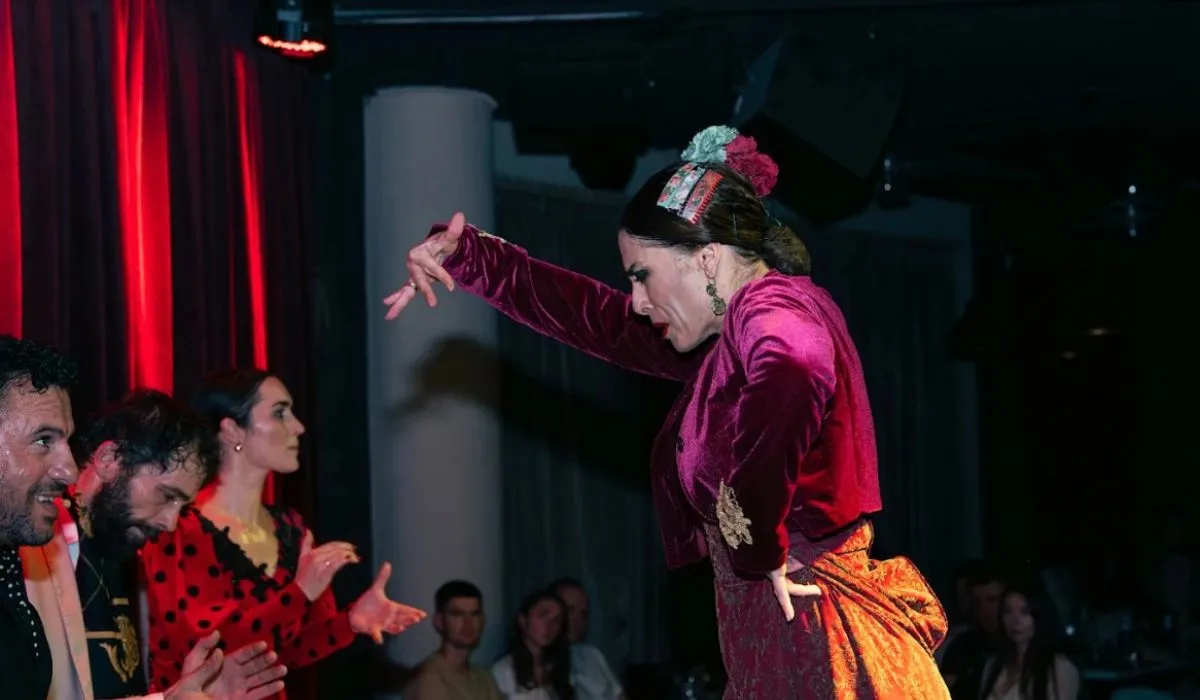
Those who arrive in the city for the first time are usually drawn by the light, the Mediterranean, and that unhurried way of understanding life. But for international tourists, Alicante is not merely a combination of beaches and gastronomy. It is also a city with a heartbeat. And when night falls, that heartbeat has a name: flamenco.
Every year, thousands of travelers from the United States, France, Germany, the Netherlands, and the Nordic countries incorporate genuine cultural experiences into their itineraries. They are not looking for a superficial show, they seek authentic emotion, they want to understand Spain from within. And along that journey, flamenco becomes an essential stop.
In Alicante, flamenco is not decoration. It is connection, it is closeness, it is the feeling of sitting just a few meters away from a cantaor breaking the silence with a soleá that sends chills down your spine.
Alicante Is Not Just Sun: It Is Living Culture for International Visitors
If you are planning your trip and want to go beyond the obvious, here you will discover:
- Why experiencing flamenco in Alicante has become a key cultural highlight for international visitors.
- How to distinguish an authentic tablao from a show designed purely for entertainment.
- Which artistic elements make a flamenco night truly unforgettable.
- How to integrate this experience into a coherent cultural itinerary in the city.
- Practical advice for booking and enjoying the performance in depth.
It is not just about attending. It is about understanding what you are witnessing.
Flamenco as an Essential Experience for International Visitors to Alicante
The Cultural Traveler No Longer Improvises
In 2026, the visitor profile has changed. International tourists plan, compare, and research. They look for experiences with identity. According to recent studies from Spain’s tourism sector, more than 40% of foreign travelers prioritize authentic cultural activities over purely recreational proposals.
Within this search, flamenco occupies a privileged place. Not only because of its international recognition as Intangible Cultural Heritage of Humanity, but because it represents a profound part of Spanish identity.
For international visitors to Alicante, attending a tablao means understanding that Spain cannot be explained through monuments alone. It is explained through living art.
What Makes a Flamenco Show a Genuine Experience?
Not everything labeled “flamenco” truly conveys flamenco.
An authentic performance stands on three pillars:
Singing: Truth and Technique
Flamenco singing demands mastery of compás (rhythm) and interpretation that comes from within. It is not merely a song; it is an emotional narrative. When a singer performs a seguirilla or a soleá, every silence carries intention. Every breath forms part of the artistic discourse.
In an intimate space, the visitor perceives these nuances. The voice is heard without artifice. The vibration is felt directly.
Dance: Strength and Precision
Flamenco dance combines rigorous technique with visceral expression. The footwork is not noise; it is rhythm. The arms are not empty gestures; they are bodily storytelling. When a bailaora or bailaor steps onto the stage, they engage in real-time dialogue with the guitar and the singing.
That interaction can only be fully appreciated when the venue allows true proximity.
Guitar: The Heart That Sustains
The flamenco guitar sets the pulse. It introduces, accompanies, and responds. An experienced guitarist masters falsetas, transitions, and changes in intensity with natural ease. The guitar does not compete with the singing or dancing—it embraces them.
For those who wish to experience flamenco with artistic guarantees, it is essential to choose a specialized venue and book in advance through the official channel for booking a flamenco show in Alicante. This ensures professional programming and a carefully curated environment.
Authentic Tablao vs. Generic Tourist Show
Many travelers ask: is there really a difference?
Yes. And it is significant.
In a specialized tablao:
- Seating capacity is limited.
- Acoustics respect the natural sound.
- Artists live flamenco as a professional discipline.
- The program maintains artistic coherence.
In more tourist-oriented formats, visual impact may take precedence over technical depth.
For international visitors who want to experience flamenco in Alicante with genuine cultural meaning, choosing the right venue is decisive.
How to Integrate Flamenco into Your Alicante Cultural Guide
Designing a Complete Cultural Day
A well-planned experience might include:
- In the morning, Santa Bárbara Castle, overlooking the city from above.
- Afterwards, a walk through the Santa Cruz neighborhood, with its whitewashed streets and flower-filled balconies.
- A visit to the MARQ Archaeological Museum to understand the history that shapes the region.
- And at nightfall, an encounter with flamenco in a professional tablao.
This is how you create a balanced Alicante cultural itinerary, where heritage and contemporary artistic expression engage in dialogue.
Practical Advice for International Tourists
Book in Advance
During peak seasons especially spring and autumn demand increases. Booking ahead allows you to organize your itinerary with peace of mind.
Arrive a Few Minutes Early
The atmosphere beforehand is part of the experience: the initial murmur, the anticipation, the intimacy of the space.
Come with an Open Mind
You do not need to know every flamenco style (palo) to enjoy it. Simply allow yourself to be carried by the performance. Flamenco communicates beyond language.
Mistakes to Avoid
- Choosing solely based on geographic proximity.
- Assuming all performances offer the same artistic level.
- Failing to research the venue’s format beforehand.
International visitors to Alicante who value culture tend to investigate before deciding. That choice often makes the difference between watching a show and living an experience.
Alicante as a Flamenco Destination with Its Own Identity
International Connectivity and Accessibility
Alicante-Elche Airport connects the city with dozens of European and American destinations, making it an ideal enclave for weekend cultural getaways or as part of a broader journey through Spain.
Visitors can enjoy the Mediterranean by day and immerse themselves in flamenco art by night—without long transfers.
Flamenco in a Mediterranean Setting
Although flamenco originated in Andalusia, its expansion has consolidated reference venues in various Spanish cities. In Alicante, the contrast between the sea breeze and the intensity of arte jondo creates a singular atmosphere.
Here, flamenco does not compete with the city. It integrates into it.
Professionalism and Artistic Coherence
In 2026, international travelers value transparency and quality. Experienced artists, stable programming, and careful stage production are key elements in building trust.
Planning your attendance in advance through the official booking channel for a flamenco show in Alicante guarantees an experience aligned with professional standards and avoids last-minute improvisation.
Cultural Alicante: A Memory That Endures
Those who travel seeking more than photographs find in flamenco an unforgettable experience. International visitors to Alicante discover that the city holds a deep, accessible, and authentic cultural dimension.
When the guitar begins and silence fills the room, the journey takes on new meaning. It is no longer just about visiting a destination. It is about connecting with an artistic expression that forms part of Spain’s living history.
If you are designing your next getaway and want your Alicante cultural guide to include an experience with true identity, plan your attendance in advance and allow yourself to be surprised by flamenco at its most intimate.
Some emotions can only be understood when they are lived.