
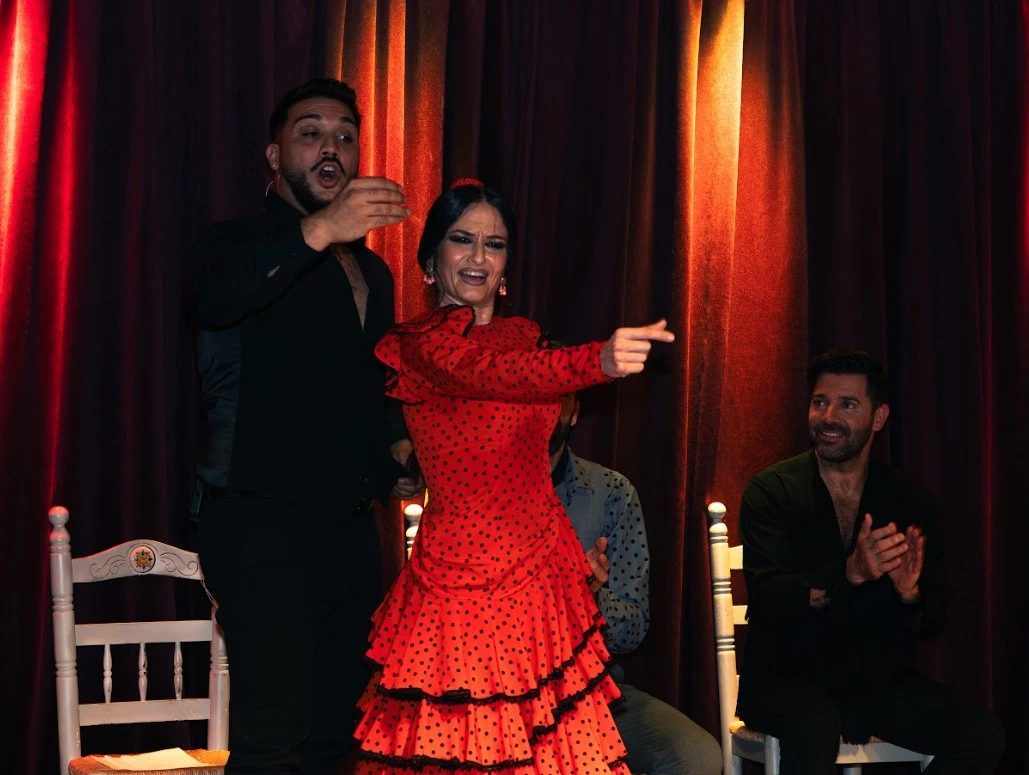
Have you ever stood in front of your wardrobe, completely blank, right before heading to a flamenco tablao?
We’ve all been there. You’ve booked a table at one of the best tablaos in town, you’ve been looking forward to this flamenco dinner show for weeks… and suddenly—panic. What on earth do I wear? You don’t want to look like a clueless tourist, but you also don’t want to show up dressed for a red carpet event. That fine line between “effortlessly elegant” and “trying too hard” can feel razor-thin.
And it’s not a trivial dilemma. Tablaos have their own identity—a unique atmosphere that blends Andalusian tradition with nighttime sophistication. Meanwhile, you’re staring at three different outfits on your bed, wondering if that printed shirt is too much… or if jeans are too casual.
Here’s the good news: after years of visiting tablaos across Spain—from iconic venues in Madrid to hidden gems along the coast—I can tell you this: dressing for a tablao doesn’t have to be stressful. But it does require understanding a few key principles.
The Unwritten Dress Code: More Flexible Than You Think
Did you know that most tablaos don’t have an official dress code? That said, “no rules” doesn’t mean “anything goes.” There’s an unspoken standard—one that’s easy to grasp if you take a moment to read the room.
A tablao is a nighttime entertainment venue. It’s not your neighborhood bar, but it’s not a formal opera house either. Think of it like a stylish restaurant you’d visit for a special occasion—refined, but not rigid.
The best-dressed people in tablaos tend to go for relaxed elegance. Picture a woman in a simple, well-cut black dress. Or a man wearing a blazer without a tie, looking completely at ease. No flashy outfits, no sloppy “casual chic” attempts—just understated style.
And what about tradition? Here’s where it gets interesting. While flamenco is deeply rooted in Spanish culture, modern tablaos have evolved. You don’t need to dress like a flamenco dancer to show respect. In fact, doing so will likely make you stand out—for all the wrong reasons.
The crowd is usually diverse: international visitors, local couples celebrating anniversaries, groups of friends, even business professionals. What they have in common isn’t their clothing—it’s their respect for the performance. And that starts with dressing appropriately.
One of the biggest mistakes? Trying too hard to “look Spanish” or to prove you understand flamenco through your outfit. Flamenco is experienced through listening, feeling, and observing—not through polka-dot shirts or dance shoes you’ll never wear again.
For Women: Effortless Elegance (No Extreme Heels Required)
At first glance, women might seem to have it easier—but there are plenty of pitfalls.
A common instinct is to go bold: bright reds, vivid yellows, floral prints. These can work—but only with the right styling and confidence.
Top recommendation: black always works.
A simple, well-tailored black dress that keeps you comfortable for a few hours is a winning choice. It may sound basic, but under the dramatic lighting of a flamenco show, black becomes anything but boring.
If black feels too safe, opt for solid colors in elegant tones. Navy blue is a fantastic option, especially in summer. Deep greens can also work beautifully, though they require a bit more personality. White can be tricky, but in coastal settings it can look stunning when done right.
What about prints?
Keep them subtle. Small, understated patterns can work—but avoid anything that feels like a costume. Polka dots can be stylish… but only if you can truly pull them off. If in doubt, skip them.
Footwear matters more than you think.
Yes, you’ll mostly be sitting—but you’ll still walk, stand, and move around. Sky-high stilettos might look great for an hour, but they can ruin your night. Go for mid heels, wedges, or even elegant flats if they complement your outfit.
Accessories are your secret weapon.
A refined piece of jewelry, a light shawl (for air conditioning), a small handbag—these details elevate your look. Just avoid overdoing it. And go easy on strong perfumes—less is definitely more in enclosed spaces.
For Men: The Art of Looking Sharp Without Overdressing
Men often fall into two extremes: either overdressed (like they’re attending a wedding) or underdressed (like they’re heading to watch a game). The sweet spot lies in relaxed sophistication.
A reliable outfit formula:
- Dark tailored trousers (not necessarily a full suit)
- A high-quality shirt (white, light blue, or another flattering solid color)
- Optional blazer
Yes—optional. Especially in summer or coastal locations, skipping the jacket is perfectly fine.
Tie or no tie?
Only if you genuinely want to wear one. A well-chosen shirt can look just as elegant without it. Just avoid extremes—no fully unbuttoned “Latin lover” look, and no suffocatingly tight collar either.
Chinos can be a great alternative.
Navy, beige, or charcoal chinos work well—as long as they’re well-fitted and properly pressed. Fit is everything.
Shoes:
Classic dress shoes are always safe, but loafers or clean minimalist sneakers can also work if the rest of your outfit is polished. Avoid running shoes, flip-flops, or anything overly casual.
Color choices:
All-black can feel too somber. Navy is a more versatile base. Grays also work well and allow more flexibility with shirts. White trousers can look great in summer—but only if worn confidently.
Seasonal Style: Dressing for the Weather
This is often overlooked—but it makes a huge difference.
Summer:
Spanish summers are intense. Even with air conditioning, tablaos can feel warm.
- Women: go for breathable fabrics like cotton or linen. Sleeveless dresses work well. Bring a light shawl just in case.
- Men: skip the blazer if needed. Lightweight shirts are key—rolled-up sleeves often look more stylish than short sleeves.
Winter:
Tablaos are usually heated, but the contrast between cold streets and warm interiors can be tricky.
Layering is your best friend. You can remove outerwear and still look polished underneath.
Coastal areas:
Even in summer, evenings can get breezy. Bring a light jacket or cardigan—comfort matters.
Rainy days:
Choose footwear that won’t get ruined, and consider whether the venue has a coat check.
Common Mistakes That Scream “First Timer”
Let’s break down the biggest style mistakes:
1. Overdoing the “Spanish look”
No need for flamenco costumes, oversized polka dots, or flowers in your hair.
2. Dressing like it’s a nightclub
Deep necklines, flashy outfits, or overly bold looks feel out of place.
3. Going too formal
A three-piece suit with a perfectly tied tie? Too much.
4. Over-accessorizing
Noisy jewelry, overpowering perfume, oversized bags—keep it subtle.
5. Poor grooming (especially for men)
Wrinkled shirts or visible sports socks can ruin an otherwise good outfit.
6. Heavy makeup
It won’t hold up under changing lights and long hours. Keep it natural and refined.
Match Your Outfit to the Tablao’s Vibe
Not all tablaos are the same—and this is where experienced visitors stand out.
- Traditional venues: favor timeless, understated elegance.
- Modern or trendy spots: allow a bit more creativity—but stay tasteful.
- Coastal tablaos: embrace lighter fabrics and Mediterranean tones.
- Hotel tablaos: more mixed crowds—dressing well helps you stand out positively.
Timing matters too:
- Dinner shows (around 9 PM) call for slightly more polished looks.
- Late-night shows are more relaxed.
- Weekend performances allow a bit more flair than weekday ones.
Pro tip:
If you’re unsure, check the venue’s website or social media. It gives you a feel for the crowd and atmosphere.
Final Thought: Comfort Is the Real Luxury
At the end of the day, dressing for a tablao is about reading the room, using common sense, and—most importantly—feeling comfortable in your own skin.
The best kind of elegance is effortless. The kind that lets you forget about your outfit and fully enjoy the experience.
Because here’s the truth:
In a tablao, the spotlight belongs to the artists—not your clothes.
Your role is to blend in with quiet sophistication, helping create the perfect atmosphere for flamenco to work its magic. And once you get that balance right, you’ll understand why tablaos remain one of the most unforgettable experiences in Spanish culture.