
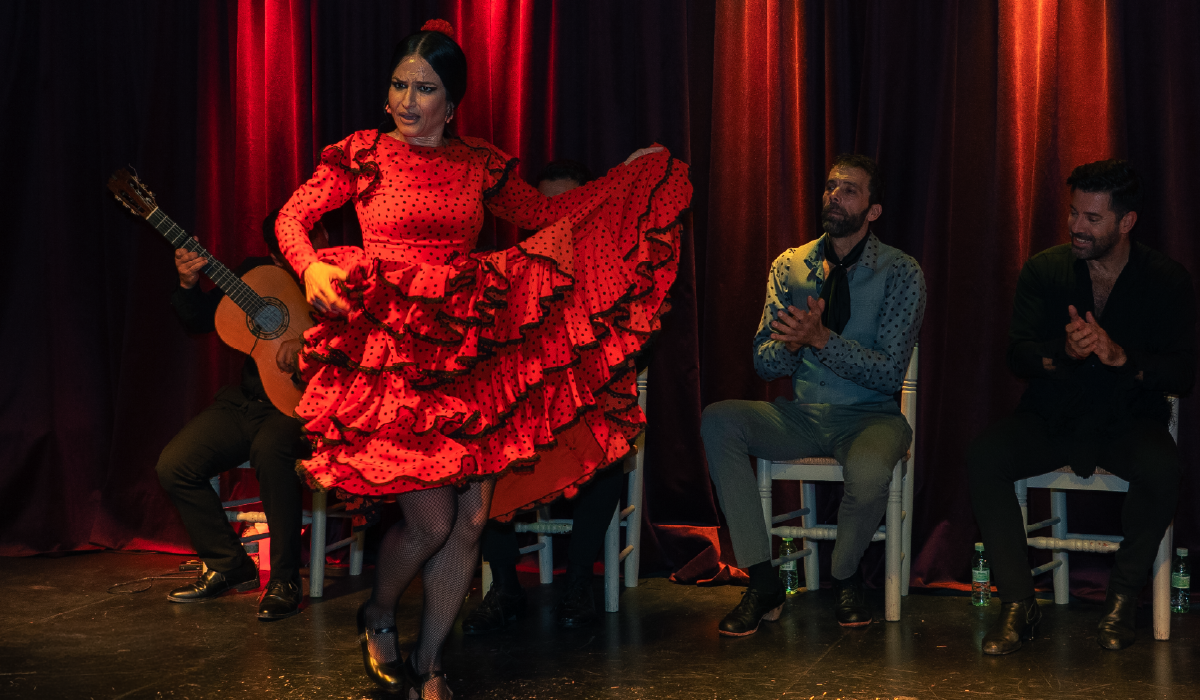
There’s a kind of music in Alicante you don’t just hear—you feel it on your skin. A rhythm that doesn’t ask permission. It slips through your pores and sparks a joy for life. We’re talking about flamenco bulerías—that playful, daring, celebratory palo that’s been making people laugh, dance, and feel deeply for centuries.
Here, where the sun seems to have its own tempo and the nights smell of salt and possibility, bulerías have found a home. And not just any home—Alicante has embraced them in its streets, its tablaos, and among its people. At places like Tablao Flamenco El Mentidero, you don’t just watch bulerías—you live them. Raw, real, and up close. As they should be.
Flamenco joy that erupts from within
This article isn’t just here to explain what bulerías are. It’s an open invitation to get close to the fire without fear. We’ll talk rhythm, history, how they’re danced, how they’re felt, and—most importantly—where to experience them live in Alicante.
Because this isn’t something to read about. It’s something to surrender to.
What is it about bulerías that moves us?
The game of rhythm that catches you off guard
The secret is in the compás. Bulerías follow a 12-beat cycle that feels chaotic at first—but it’s precise to the last accent. The beats fall in unexpected places, and the energy practically commands your body to react. It doesn’t matter if you’re new to flamenco or born into it—that rhythm will find you, test you, and pull you in.
More than music—it’s a way of saying: “nothing holds me back”
Born in Jerez, bulerías come from joy, from cheeky improvisation, from unfiltered artistry. They were sung at parties, at the end of long nights—to release tension, to seal a gathering with laughter, daring, and soul.
Yes, they’ve made it to the stage. But when performed right, they still carry that same truth. That unspoken “Let’s see who dares” energy that makes them feel like home.
Alicante: a land of light and bulerías
A city that dances on the inside
It may not be Jerez, but Alicante has its own flamenco fire. Something about this city makes people crave flamenco—and treat it with deep respect. Bulerías have found room here to grow, to evolve, to shine.
At El Mentidero, you feel bulerías inches from your soul
Anyone who’s been to Tablao Flamenco El Mentidero knows: the magic isn’t just on stage—it’s in the air. When the guitarist strums, and the dancer stamps her heel with intent… words disappear. You don’t need to understand technique. You just need to be present.
Tradition, yes—but with a fresh perspective
In Alicante, there’s a love for the old ways, but also a hunger for reinvention. Bulerías collide with jazz, with world percussion, with modern aesthetics. And rather than dilute them, it enriches them. Because living art is art that allows itself to evolve—without losing its core.
How to watch a bulería and never want to leave
Don’t come just to watch—come to feel
Forget about analyzing every beat. Bulerías aren’t understood with the mind—they’re understood with the body. With that shiver that runs through you when everything lines up and explodes.
Watch their eyes. that’s where the magic is.
The beauty of bulerías lies in the glances exchanged between artists. A look, a nod, a moment of silence that says more than words. The dancer steps in—bold, daring—and everything shifts.
If you’re going to say “¡olé!”, let it be real
Jaleos (cheers) aren’t just noise. They’re support, connection, part of the moment. If you’re unsure—stay quiet, watch, and wait. When it’s your turn, you’ll know.
For the ones who want to go deeper
Bulería Isn’t Alegría or Tango
Each flamenco palo has its flavor. Bulería is fast, cheeky, bold. Alegría is lighter, more lyrical. Flamenco tango is earthier, more grounded. Like three cousins—similar, but each with their own personality.
Who Leads a Bulería?
Sometimes it’s the singer. Sometimes the dancer. The beauty is in the hand-off. The moment the power shifts. The real art is knowing when to take it—and when to let go.
Alicante Also Teaches
Feeling curious? There are classes, workshops, and jam sessions where you can learn clapping patterns (palmas), understand the rhythm, and shake off your nerves. Because bulerías aren’t just for watching—they’re for living.
What everyone wants to know (but rarely asks)
Is bulería the same as bulería por soleá?
Not quite. They’re close, but different. Bulería por soleá is slower, more introspective. Like bulería with its feet on the ground. Regular bulería flies.
Is learning bulerías hard?
Yes. But it’s a glorious challenge. No one starts as an expert. And the first time you lock into the rhythm—even for a second—it’s pure adrenaline.
Where can I see real bulerías in Alicante?
El Mentidero is a must. For the atmosphere, the talent, and the feeling that this is where flamenco actually happens.
If you’ve made it this far, something has stirred in you
Flamenco bulerías aren’t just art—they’re fire, challenge, and laughter bursting from the chest.
In Alicante, this palo has found its own voice, its own rhythm, its own soul. And if there’s one place to feel it up close—it’s Tablao Flamenco El Mentidero.
So stop reading. Come see it. Be a witness. Or if you’re bold, become part of it.
Because when a bulería hits you deep—something shifts.
Forever.
¡Olé to you. Olé to Alicante. Olé to flamenco that doesn’t ask for permission.