
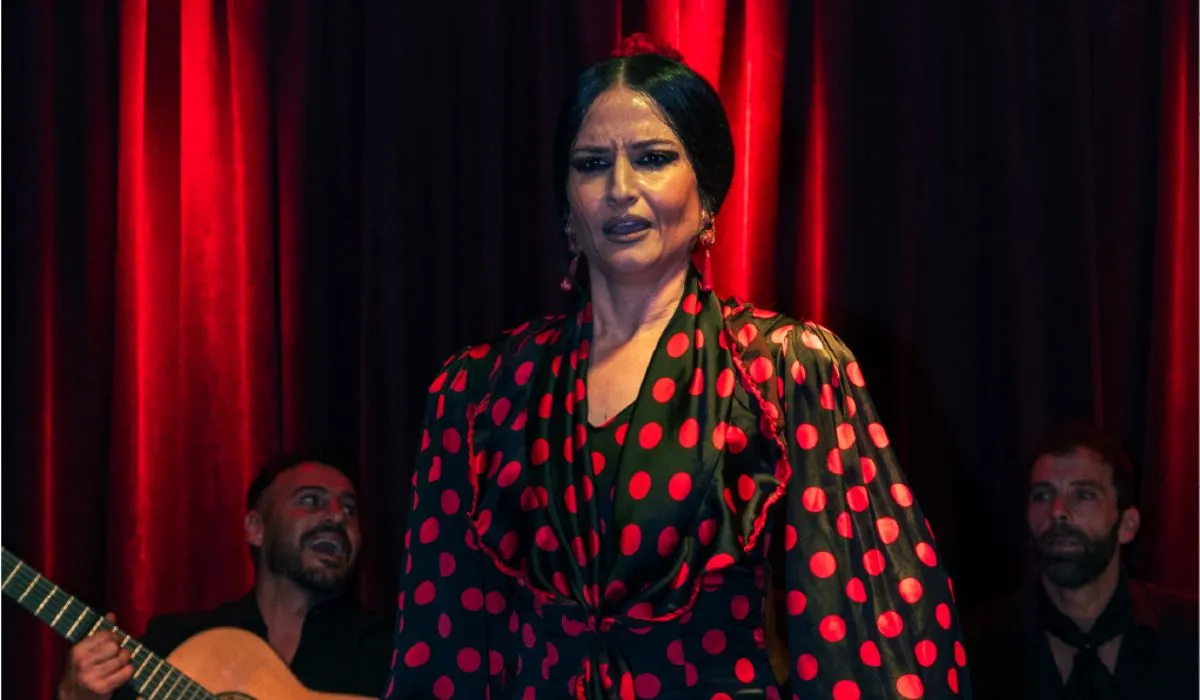
Alicante is much more than beaches, castles, and sunset walks. It’s also that place where flamenco finds an unexpected yet natural stage. On its warm nights—when the echo of the guitar and the stomp of the heel merge with dim lights and the salty breeze—Andalusian art comes alive. Here, where no one expects it, duende slips between tables and shared dinners. But not every show will do. Choosing the best flamenco show in Alicante is a matter of instinct, emotion, and knowing what to look for.
This isn’t a tourist brochure disguised as a guide. It’s an invitation to truly understand how flamenco is lived in this city, and what details turn an evening into something you’ll remember for years.
If you take one idea with you, let it be this: the best flamenco isn’t watched—it’s felt.
Flamenco isn’t something you consume like a streaming series. It’s not about VIP seats or big productions with fireworks. We’re talking about something else—goosebumps, a quejío that settles in your chest and won’t leave. So, if you’re searching for the best flamenco show in Alicante, get ready to look with different eyes.
In the next few lines, we’ll not only give you practical tips but also tell you what no one else does—what details to watch for, what mistakes to avoid, and how to tell whether what you’re about to book is a gem or just a tourist trap. We’ll also share real experiences, tablaos that take their craft seriously, and how to make the most of a night that can be magical… if you choose wisely.
What you’ll take away after reading this
- You’ll learn to tell a soulful show from an empty performance.
- You’ll discover the different types of flamenco shows in Alicante—traditional, fusion, dinner-inclusive, intimate—all with their pros and cons.
- You’ll understand what makes a flamenco night work (and what ruins it).
- You’ll have clear steps to choose wisely—from checking the lineup to booking at the right venue.
- We’ll leave breadcrumbs, clues to guide you toward the places where flamenco feels real.
Spoiler: yes, such a place exists. And it’s closer than you think.
What makes a flamenco show stay with you
Artists with history (and scars)
Copied choreography and textbook rhythms don’t cut it here. Good flamenco isn’t learned—it’s lived, suffered, and celebrated. What truly makes the difference is who’s on stage. A bailaora improvising a bulería with her eyes closed isn’t the same as someone posing through soulless steps.
Look for names with a story, even if you don’t recognize them. Many of the best flamenco shows in Alicante bring artists from historic peñas, legendary tablaos, and festivals in Granada or Jerez. Those performers carry a different bloodline—you can feel it.
The space matters (a lot)
An authentic tablao doesn’t need to be huge—in fact, the smaller, the better. You want closeness without invasion. The acoustics should honor every palma, the lighting shouldn’t distract. In Alicante, some venues have nailed this balance—like Tablao Flamenco El Mentidero, where you don’t just eat well—you listen with your gut and watch with your soul.
Balance between singing, guitar, and dance
You don’t need an army of performers if the few you have reach your core. A trio can move you more than a cast of ten—if there’s truth. What matters is coherence: singing that breaks you open, dancing that tells a story, a guitar that doesn’t just accompany but converses.
Some shows in Alicante even dare to improvise—that’s when duende shows up unannounced.
The repertoire shouldn’t always be the same
Soleás, seguiriyas, tangos, alegrías, bulerías… Flamenco is vast. A show that leans only on spectacle loses depth. The best tablaos mix styles, taking you from sorrow to joy within a single set—without losing authenticity. Some even blend elegant fusions (jazz, Latin sounds, percussion) while keeping the essence intact.
(Very) practical steps to get it right
Dinner with a show or pure flamenco?
It’s like choosing between dessert wine or straight whisky. If you want the full experience—dining, wine, and performance—some places do it beautifully. Others, however, sell you a tourist menu with flamenco as background noise. The key is that the show stands on its own. At El Mentidero, for instance, we get it—yes, there’s dinner, but there’s also deep respect for the stage.
Do your homework: research
In the age of social media, you’ve got more info than you think. Watch videos, listen to clips, check artist backgrounds. Google and TripAdvisor reviews can help, but look for the ones that mention the heart of the performance, not just table service.
Don’t wait until the last minute
Important: good venues don’t have 300 seats. They fill up fast—especially Fridays and Saturdays. Once you’ve decided, book early. Don’t gamble on generic apps; you might pay more or arrive to find it sold out.
Mind the schedules
Weekends pulse with energy and atmosphere. But if you crave intimacy, Thursdays are perfect. Check for guest artists—many shows announce them on social media.
For those who want more than just a show
Alicante also dances por bulerías
Though it might surprise you, flamenco’s roots in Alicante run deep. Many Andalusian artists settled here, and local dance schools have grown their own talent. The climate, cultural tourism, and local love of music did the rest. Today, the city doesn’t just host flamenco—it embraces it.
Tips that seem obvious until you forget them
- Arrive early. With time. Without rushing. With excitement.
- Don’t film. Don’t check your phone. Watch with all five senses.
- Respect the silences. Some moments freeze time—and words break them.
- Ask questions. If you can chat with the artists afterward, do it. Their stories aren’t on YouTube.
Flamenco for celebrations—why not?
More and more companies and private clients are discovering the magic of flamenco evenings as private experiences. Be it a birthday, an intimate wedding, or a corporate event, some tablaos offer tailor-made shows—with tastings, interaction, and emotion.
Plan ahead, tell them what you’re looking for, and let them guide you. The result may be something unforgettable.
What people always ask (and no one answers properly)
Is there real flamenco in Alicante, or is it just for tourists?
Of course, there’s real flamenco. But there are also shows made for photo ops. That’s why choosing carefully matters—look for venues with professional artists, curated programs, and authenticity over folklore.
Do I need to know about flamenco to enjoy it?
No—and that’s the beauty of it. You don’t need to know which palo they’re playing for it to move you. Just be present and let go.
Can I go with my kids?
Depends on their age. Young children might get restless, but if they’re over 7 or 8 and musically curious, they’ll love it. Prep them—show a video first, tell them a bit. Let them arrive wide-eyed.
What should I wear?
You don’t need formalwear, but this isn’t a beach bar. Dress in something that feels good and honors the occasion. Flamenco is also elegance.
What’s the best day?
Fridays and Saturdays are more intense. Thursdays are calmer. You choose your mood.
And now what? book it
No need to wrap this up with a bow—you already know what matters. You’ve learned to look beyond the surface, to tell real art from imitation, to sense where the duende lives.
Now there’s just one thing left—live it.
Book your spot and get ready. Because if the show is good—and it is—something will move inside you. Something unexpected. Something that changes you.
And that, my friend, isn’t something many experiences can do.